Websites for Coaches Ready to Take Their Brand Seriously

A simple coaching website needs three things to be worth building: a clear explanation of who your coaching is for, a simple way to book a call, and a way to collect email addresses through a free resource. Everything past that is style.
Starting your coaching business on social media alone makes a lot of sense. There's no cost to set up a profile, no design decisions to work through, and no waiting on a build before posting and connecting with people. If you're still figuring out your niche and testing what resonates, that low barrier to entry is a real advantage, not something to feel behind about. Websites for coaches simply make the most sense once you have that initial clarity.
The shift usually comes later, once your business itself has taken shape. Your niche is clear, you have a few client wins behind you, and there's finally something worth sending people to beyond a social profile. That's the moment a website starts to matter, especially when it's time to take your brand seriously and have one place to point new leads, referrals, and podcast guest bios toward, instead of hoping they find the right post in a feed.
The three templates below were made for coaches at that stage. Each one works for any coaching niche and can be styled to suit your existing brand, with room to change fonts, images, and colours throughout. Each includes ten pages built around three things your coaching business tends to need most once it's ready for a home base: a clear explanation of who your coaching is for, a simple way to book a call, and a way to collect email addresses through a free resource.
Why a website matters at this stage
A social profile is made for discovery. Someone scrolls past a post, it resonates, and they follow. A website serves a different moment, the one after that, when someone is curious enough to look you up before deciding whether to book a call or reply to a DM. At that point, a single page that lays out who your coaching is for and how to take the next step tends to do more than another social profile would.
There's also a practical side to having a website once your business is a few steps in. A domain and an email list are things you can point to as your own, separate from any one platform. That matters less when you're still testing an idea, and starts to matter more once referrals, guest podcast appearances, or word of mouth start bringing people who've never seen a single post.
Why a template instead of a custom design
A custom website usually means working with a designer, going back and forth on details, and paying a designer's rate for that time and expertise. A template gives a similar outcome, a site that belongs fully to you, without needing to hire someone to design it from scratch.
If you're comfortable making basic edits in a drag and drop website editor, the right website template makes it possible to add your own photos, update the text, and get a site live without a design background. It's a solid option if you want a website of your own without taking on a fully custom design process.
If you're a website designer
These templates aren't only for coaches building their own websites. They also work well for website designers who regularly work with coaching businesses.
Instead of starting each project from scratch, you can begin with a website structure that's already built around what most coaches need once their business reaches this stage. From there, it's easy to adapt the design to suit each client's brand through their colours, fonts, imagery, and copy, while keeping the underlying page structure in place.
For designers who build websites for coaches on a regular basis, that can make the design process more consistent without every project ending up looking the same.
What's included in every template
Each of the three templates below is a Squarespace template, and each comes with the same ten pages, so the layout underneath stays consistent no matter which style fits best:
Home, to introduce who you are and who you help
Services, to lay out what's offered and how to get started
About, to build a sense of who you are beyond a social media feed
Book a Call, so the next step is never more than one click away
Contact, for anything outside a booking
Legal, for terms and a privacy policy
Link in Bio, so the link in your Instagram or TikTok bio finally points to a page you own
404, so even a broken link still feels on brand
Freebie Sign Up, to start building an email list of your own
Thank You, to deliver the freebie and open the door to what comes next
None of the three templates include a blog page, which keeps the focus on social media as the main way to post and connect for now. A blog can always be added later, once you have time to put toward search engine visibility specifically, but it isn't something that needs to happen at this stage.
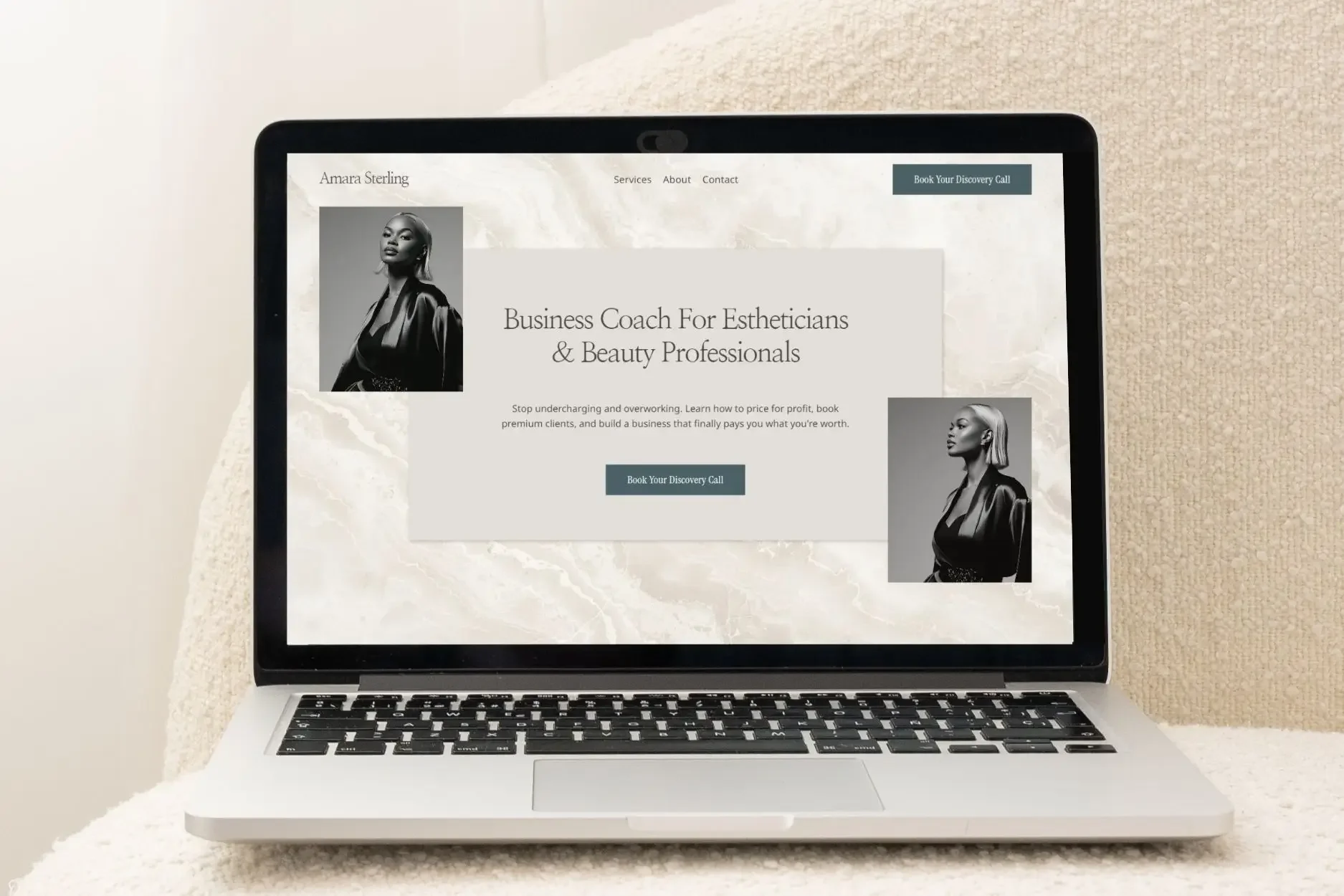
Sable Eve, an earthy and grounded template
Sable Eve uses warm neutrals and a calm, minimalist layout. It tends to suit business coaches, mindset coaches, or wellness coaches who want a site that feels steady rather than loud, especially if your coaching style is one on one and relationship driven rather than built around high energy group programs.
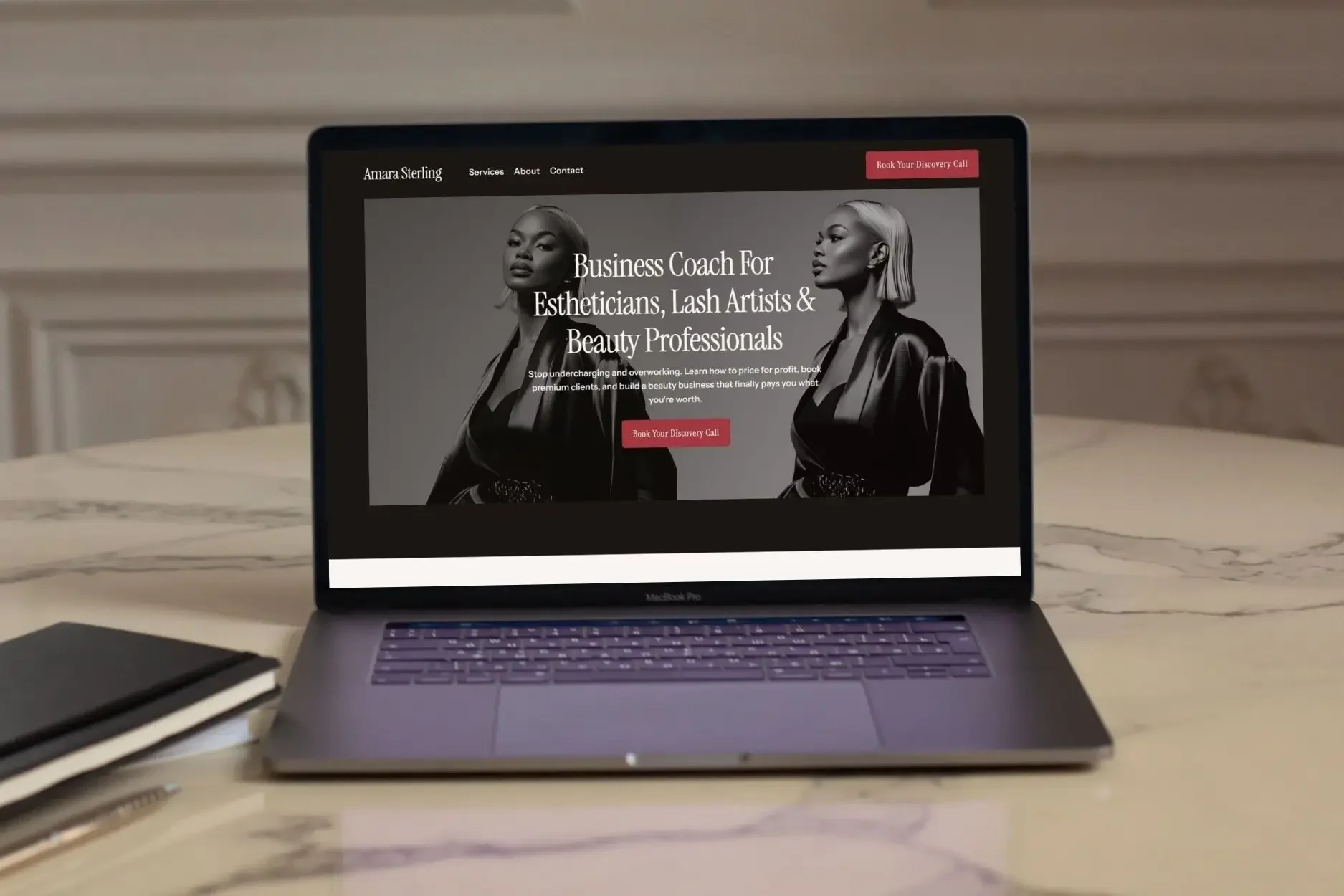
Surge, a bold and confident template
Surge has a more refined, higher contrast look, with deeper tones and sharper structure throughout. It tends to suit business coaches, confidence coaches, or anyone running group programs or masterminds who wants a site that feels established from the first scroll.
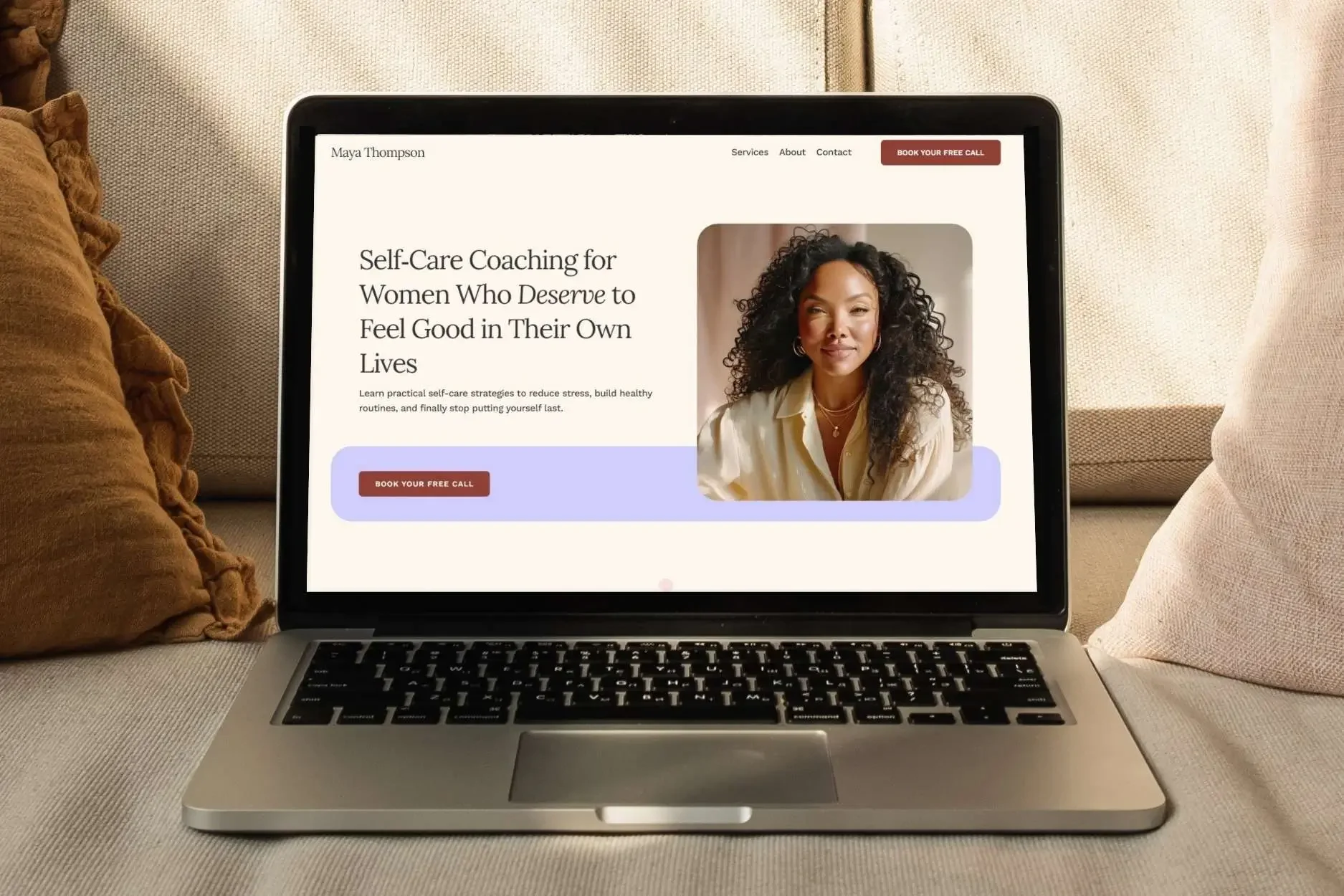
Beryl, a colourful and inviting template
Beryl anchors soft lilac, blush, and warm cream with rich terracotta accents and shapes to create an inviting atmosphere. It is ideal for life coaches, career coaches, or anyone who wants a site filled with warmth and personality rather than a plain, minimalist layout.
View the Beryl live demo · Get the Beryl template
Which template fits best
A calm, grounded feel points toward Sable Eve. A bold, established feel points toward Surge. A colorful, pastel feel points toward Beryl. All three include the same ten pages, the same booking setup, and the same lead capture system, so the choice comes down to how you want your brand to feel to a new visitor, not which template does more work than the others.
Where this fits with the rest of your coaching business
Building a website doesn't mean stepping back from social media. It stays the place to post, connect, and build familiarity day to day. What your website adds is one place to send people once they're past the discovery stage, somewhere a booking link and a free resource can do their job without depending on a single post being seen.
Questions you might have
Do you need a website if social media is already bringing in clients?
Not right away. Social media can carry your coaching business through its early stages on its own. A website tends to matter once there's a brand worth pointing people to beyond a single platform, especially for referrals or anyone hearing about your coaching secondhand.
Can one website template work for any coaching niche?
Yes. The three templates covered here work for business, mindset, wellness, life, and career coaching alike. What changes between niches is usually the photos, colours, and wording you use on the page, not the page structure itself.
Does your coaching website need a blog?
No, not at the start. A blog can help with long term search visibility, but your coaching website can do its main job, credibility, booking, and email capture, without one. You can always add a blog later if you decide to invest time into SEO for lead generation. If your leads come mainly through referrals or social media, skipping a blog entirely is a reasonable call too.
Pretty Boss Designs creates Squarespace website templates for service-based business owners who want a polished starting point without the custom design price tag. Every template is built with care and intention so you can spend less time fussing with your website and more time doing the work you love.